How Amino Alcohols Support Paint and Coating Formulations
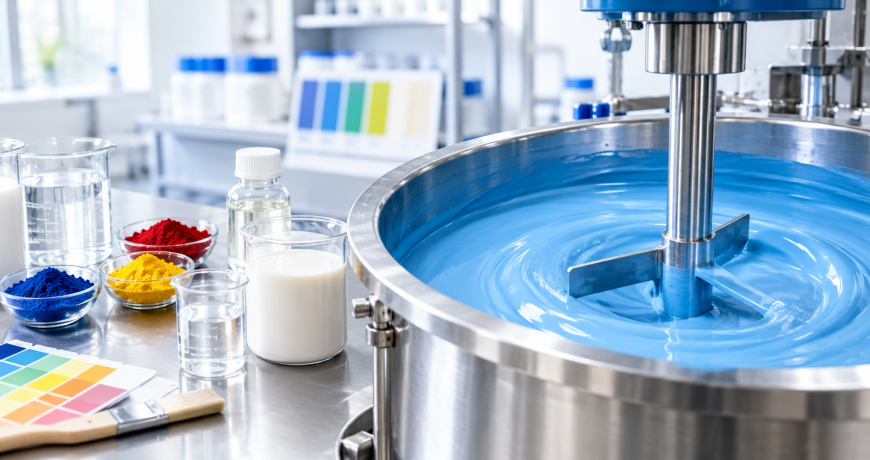
Paint and coating formulations may look simple, but achieving consistent quality requires careful control of several ingredients. A coating needs to have the right pH, good stability, smooth application, proper pigment dispersion, and reliable performance after drying. Small changes in formulation can affect viscosity, appearance, storage stability, and overall coating performance.
This is where amino alcohols can play an important role.
Amino alcohols are multifunctional ingredients used in many water-based paint and coating formulations. They can work as pH adjusters and neutralizing agents, while also supporting formulation stability and compatibility. Products such as AMP 95 are used for these purposes in water-based coatings and other industrial formulations.
What Are Amino Alcohols?
Amino alcohols are organic compounds that contain both an amine group and an alcohol group. This combination gives them useful chemical properties that make them suitable for different industrial applications.
In paint and coating formulations, one of their important functions is helping formulators control the pH of water-based systems.
Many water-based paints and coatings need to remain within a specific pH range for their ingredients to work properly. A suitable pH can help maintain formulation stability and support consistent viscosity and application properties. Amino alcohols can be added during formulation to adjust the pH according to the requirements of the coating system.
1. pH Control
One of the main reasons amino alcohols are used in coatings is pH adjustment.
Water-based paints commonly contain resins, pigments, dispersants, thickeners and other additives. These ingredients can respond differently depending on the pH of the formulation. Maintaining the desired pH helps keep the formulation more stable and predictable.
An amino alcohol can be used as a neutralizing agent to bring the formulation to the required pH and help maintain it during storage and use.
For manufacturers, this means better control during production and fewer unexpected changes in the finished product.
2. Supporting Formulation Stability
A good paint should remain stable not only during manufacturing but also while it is stored.
Changes in pH can influence viscosity, dispersion and the interaction between different ingredients. Amino alcohols can support pH stability, helping the formulation maintain more consistent properties over time.
This is particularly useful in water-based systems where several components need to work together in a controlled environment.
3. Helping Pigment Dispersion
Pigment dispersion is another important part of paint manufacturing. Pigments need to be distributed evenly throughout the formulation to achieve consistent colour, appearance and performance.
Certain amino alcohol-based additives can also support pigment wetting and dispersion. Research and formulation examples have shown that amino alcohol neutralizers can be used in coating systems while maintaining properties such as viscosity, gloss and opacity.
Good dispersion can contribute to a smoother and more uniform finished coating.
4. Improving Compatibility in Water-Based Systems
The move toward water-based paints has increased the importance of ingredients that work well in aqueous formulations.
Amino alcohols can offer good water solubility and compatibility, making them useful in water-based paint and coating systems. ASMAKA AMP 95, for example, is described as a high-purity amino alcohol designed for pH control, neutralization, formulation stability and compatibility with water-based systems.
This makes amino alcohols useful for manufacturers developing modern water-based formulations.
5. Supporting Consistent Application
The quality of a coating is not determined only by its chemical composition. It also needs to apply smoothly and provide consistent results on the surface.
A well-controlled formulation can help maintain predictable viscosity and application behaviour. Since pH can influence the behaviour of several coating ingredients, maintaining the correct pH can indirectly support the consistency of the finished product.
For manufacturers, this can be important when producing coatings in larger batches where consistency from one batch to another matters.
Where Are Amino Alcohols Used?
Amino alcohols can be found in a variety of formulation applications, including:
- Water-based paints
- Architectural coatings
- Industrial coatings
- Protective coatings
- Construction chemicals
- Polymer and emulsion systems
- Other industrial formulations
For example, Asmaka Chemicals lists ASMAKA AMP 95 for water-based paints and coatings, construction chemicals, emulsions, polymers, industrial formulations and personal care applications.
Choosing the Right Amino Alcohol
Not every paint formulation has the same requirements. The right amino alcohol depends on the resin system, formulation chemistry, desired pH, processing conditions and final coating properties.
Before selecting an ingredient, manufacturers should consider:
- Required pH range
- Compatibility with the binder and other additives
- Water solubility
- Neutralization efficiency
- Effect on viscosity
- Storage stability
- Pigment and additive compatibility
- Application requirements
Testing the ingredient in the actual formulation is important because performance can vary depending on the complete formulation.
Conclusion
Amino alcohols may be used in relatively small quantities, but they can have an important role in the overall performance of paint and coating formulations. By helping with pH adjustment, neutralization, formulation stability and compatibility, they allow manufacturers to better control water-based coating systems.
For modern paint and coating manufacturers, selecting the right multifunctional additive is an important part of developing a stable and consistent product. ASMAKA AMP 95 is one such amino alcohol designed to support pH control, neutralization and formulation stability in water-based systems.
The key is not simply adding an amino alcohol, but choosing a grade that fits the specific chemistry and performance requirements of the formulation.

There are no comments