
What Are Concrete Admixtures and Why Are They Important?
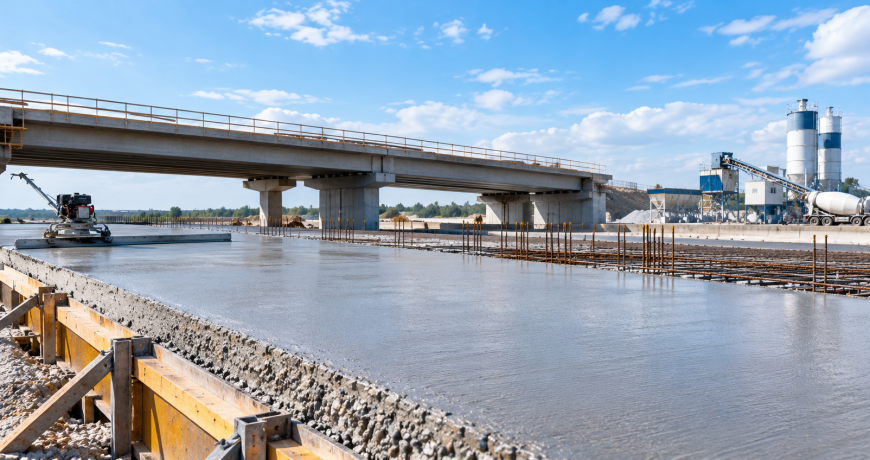
Concrete is one of the most commonly used materials in construction. It is used for buildings, roads, bridges, foundations, pavements, tunnels and many other structures. Traditionally, concrete is made by mixing cement, water, sand and aggregates. However, depending on the project, this basic mixture may not always provide the performance required.
This is where concrete admixtures become useful.
Concrete admixtures are special materials added to concrete before or during mixing to improve certain properties of fresh or hardened concrete. They can help improve workability, setting time, strength, durability and overall performance without completely changing the basic concrete mix.
What Are Concrete Admixtures?
Concrete admixtures are generally added in small quantities to modify the properties of concrete according to the requirements of a particular construction project.
Different admixtures are designed for different purposes. Some help concrete remain workable for longer periods, while others can speed up setting, improve strength or protect concrete from specific environmental conditions.
The right admixture depends on factors such as the type of concrete, weather conditions, construction method, required strength and the final application.
Why Are Concrete Admixtures Important?
Modern construction projects often have specific performance requirements. Concrete may need to be pumped over long distances, placed in difficult locations, used in hot or cold weather, or achieve high strength within a limited time.
Using the appropriate admixture can help address these challenges.
1. Improve Workability
Workability refers to how easily fresh concrete can be mixed, transported, placed and finished.
A concrete mix with poor workability can be difficult to handle and may require additional water. However, adding excessive water can negatively affect the final strength and durability of concrete.
Certain admixtures, especially water-reducing and superplasticizing admixtures, can improve workability while helping maintain a lower water-to-cement ratio.
This can make concrete easier to place without unnecessarily increasing the amount of water in the mix.
2. Support Higher Strength
Concrete strength is an important consideration in structural construction.
Some admixtures allow manufacturers and contractors to achieve the required workability with less mixing water. A lower water-to-cement ratio can contribute to higher-strength concrete when the overall mix is properly designed.
Superplasticizers are commonly used for applications where high workability and strength are both required.
This can be particularly useful for high-performance concrete, precast elements, structural components and demanding construction projects.
3. Control Setting Time
Construction conditions are not always the same. Sometimes concrete needs to set faster, while in other situations it needs to remain workable for a longer period.
Accelerating admixtures can help speed up the setting or early strength development of concrete. They may be useful in repair work, shotcrete and projects where early strength is important.
On the other hand, retarding admixtures can slow down the setting process. They can be useful during hot weather or when concrete needs to be transported and placed over a longer period.
4. Improve Durability
A concrete structure is expected to perform for many years. Exposure to water, chemicals, temperature changes, abrasion and other environmental conditions can affect its durability.
Certain admixtures can help reduce permeability or improve resistance to specific environmental conditions.
For example, air-entraining admixtures create small, controlled air bubbles within concrete. These can help improve resistance to freeze-thaw conditions and may also improve workability.
The correct admixture can therefore contribute to longer-lasting concrete when it is properly selected and used.
5. Reduce Construction Challenges
Construction projects often have practical challenges such as long transportation times, congested reinforcement, difficult placement areas or demanding weather conditions.
Admixtures can help concrete perform more effectively under these conditions.
For example, a superplasticizer can make concrete more fluid and easier to place, while an accelerator can help when faster setting or early strength is needed.
This can make the construction process more manageable and efficient.
Conclusion
Concrete admixtures have become an important part of modern concrete technology. They allow concrete manufacturers, engineers and contractors to modify specific properties of concrete according to project requirements.
From improving workability and controlling setting time to supporting strength and durability, the right admixture can make a significant difference in concrete performance.
However, there is no single admixture that is suitable for every project. The selection should be based on the concrete mix, application, environmental conditions and required performance.
With proper selection, dosage and testing, concrete admixtures can help create more workable, durable and performance-focused concrete for modern construction projects.

There are no comments